Source High Precision Tungsten Steel Mold for Car, Electronic, Hardware
Compare 30 high precision tungsten steel mold options from verified Chinese suppliers. These molds support injection molding for automotive, electronic, and hardware applications with customizable materials and high precision tolerances.
Key considerations
Products List


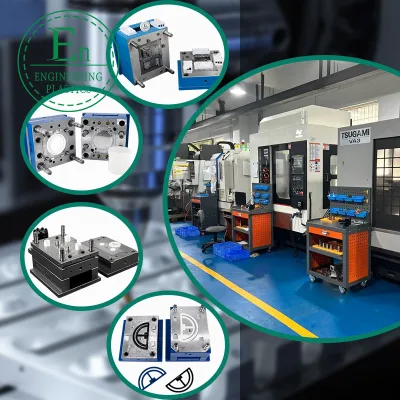


Comprehensive Sourcing Guide
Strategic Sourcing Guide for High Precision Tungsten Steel Mold Components
Understanding the Technical Landscape of Precision Mould Parts
When sourcing high precision tungsten steel mold components, buyers must first distinguish between the specific material properties of tungsten steel and the broader category of steel moulds often found in general industrial listings. While the core keyword emphasizes tungsten steel, the available market data indicates a diverse range of mould materials, including P20, 718, 738H, NAK80, and S136. These materials are frequently cited for injection moulding applications, offering varying degrees of hardness, corrosion resistance, and polishability. Tungsten steel, known for its extreme hardness and wear resistance, is typically reserved for high-volume production runs or applications requiring sharp, durable cutting edges, such as in fastener dies or pin punches.
The technical specifications for these components are highly variable and often driven by the specific application. The observed product attributes highlight a strong emphasis on "High Precision," with tolerance levels as tight as +/-0.01mm for certain injection moulding applications. This level of accuracy is critical for industries such as automotive, electronics, and hardware, where component fitment is non-negotiable. Buyers should verify if the specific tungsten steel component they are evaluating meets these tolerance standards, as general mould bases may only offer standard tolerances unless explicitly customized. The model numbers observed, such as JG-PP-HP-91-5 and JG-SD-356-29, suggest a structured naming convention that often encodes the product type, material grade, and dimensional specifications. Understanding this nomenclature is essential for cross-referencing technical drawings with supplier catalogs.
Furthermore, the shaping mode for these components is predominantly plastic injection moulding, though the data also references fastener dies, nut dies, bolt dies, and screw dies. This indicates that "high precision tungsten steel mold" can refer to either the tooling used to shape plastic parts or the dies used to form metal fasteners. The distinction is vital because the wear characteristics and surface treatments required for metal forming differ significantly from those for plastic injection. Surface treatments such as polishing, painting, and texturing are standard options, but the specific finish required for tungsten steel tools often involves specialized hardening processes to maintain the precision over thousands of shots.
Compliance, Certification, and Regulatory Standards
In the global B2B market, compliance is not merely a formality but a prerequisite for market access and liability protection. The supplied data confirms that ISO certification is a standard attribute for these mould products, with some listings also citing CE and RoHS compliance. These certifications are particularly relevant for products destined for the European market or industries with strict environmental and safety regulations, such as medical processing and food processing injection molding. Buyers must verify that the supplier's ISO certification is current and covers the specific manufacturing processes involved in producing tungsten steel components.
The certification status of a supplier often correlates with their quality management systems. For high-precision tools, the ability to demonstrate compliance with international standards is a strong indicator of process stability. The data mentions "Custom box gauge" as a product standard, which implies that packaging and dimensional standards may be tailored to the order. However, the underlying manufacturing standards, such as those for material composition and heat treatment, should align with recognized industry norms. Buyers should request documentation proving that the tungsten steel material used meets specific chemical composition standards, as the performance of the mould is directly dependent on the purity and alloying elements of the steel.
Additionally, the application of these moulds in sectors like the automotive and electronic industries often requires adherence to specific industry standards beyond general ISO certification. For instance, automotive suppliers may require IATF 16949 compliance, while medical device manufacturers might look for ISO 13485. Although the provided text does not explicitly list these industry-specific certifications, the presence of ISO, CE, and RoHS suggests a baseline of regulatory awareness. Buyers should explicitly ask suppliers if they have experience with the specific regulatory frameworks of their target market to ensure that the moulds will not cause compliance issues during the final product's certification process.
Cost Drivers and Pricing Dynamics in Precision Tooling
The pricing structure for high precision tungsten steel molds is complex and influenced by multiple variables. The observed price range in the market spans from $0.1 to $6,000, a wide disparity that reflects the difference between small, simple components like pin punches and large, complex injection moulds. The cost is primarily driven by the material grade, the complexity of the cavity design, the precision tolerance required, and the surface treatment specifications. Tungsten steel itself is a premium material, and its cost fluctuates based on global raw material markets. Consequently, a mould made from tungsten steel will inherently carry a higher base cost compared to those made from standard P20 or 718 steel.
Another significant cost driver is the customization level. The data indicates that customization is available for weight, size, color, and material. Customized orders typically incur higher costs due to the need for unique design work, specialized tooling setups, and longer lead times. The "One-time Molding" attribute is noted as "Not One-time Molding," suggesting that these are reusable tools designed for mass production. This durability is a key value proposition but also contributes to the initial investment. Buyers should understand that the low-end of the price spectrum likely corresponds to standard, off-the-shelf components or smaller dies, while the high-end reflects fully customized, multi-cavity injection moulds with tight tolerances and advanced surface treatments.
The minimum order quantity (MOQ) also plays a role in the effective unit cost. The observed MOQ range is 1 to 100 units. For high-precision tungsten steel molds, an MOQ of 1 might apply to sample units or simple dies, whereas larger production runs of complex moulds may require higher volumes to justify the setup costs. Buyers should negotiate based on their projected lifecycle volume, as the unit cost often decreases significantly with larger orders. Additionally, the "Single gross weight" of 1.000 kg for some items highlights that shipping costs can be a hidden variable, especially for heavy steel components. Transportation methods, including air, sea, and railway, offer different cost and speed trade-offs that must be factored into the total landed cost.
Typical Applications and Industry Use Cases
High precision tungsten steel molds serve a critical role across a diverse array of industries, each with unique demands on the tooling. The data explicitly lists applications in the automotive, electronic, hardware, and commodity sectors. In the automotive industry, these molds are used for producing durable plastic components that must withstand high temperatures and mechanical stress. The "High Temperature Resistance" attribute mentioned in the specifications is particularly relevant here, as engine bay components and under-the-hood parts require materials that do not degrade under thermal load.
The electronics sector relies heavily on these molds for the production of small, intricate components where precision is paramount. The ability to achieve tolerances of +/-0.01mm is essential for electronic housings, connectors, and internal parts that must fit together with minimal clearance. The "Injection Molding Plastic Parts" specification confirms that these tools are often used to create the plastic casings and internal structures of electronic devices. Furthermore, the mention of "Medical processing injection molding" and "Food Processing Injection Molding" indicates that these molds are also utilized in highly regulated environments where hygiene and material safety are critical. In these sectors, the surface finish and material purity of the tungsten steel are vital to prevent contamination and ensure product safety.
Hardware and fastener production represent another major application area. The list of main products includes fastener dies, nut dies, bolt dies, and screw dies. These tools are designed to cut and form metal fasteners with extreme precision. Tungsten steel is the material of choice here due to its ability to maintain a sharp edge and resist wear during the high-pressure forming process. The "Pin Punch" and "Screw Die" components are essential for mass-producing fasteners that meet strict dimensional standards. Whether for general commodity use or specialized industrial applications, the versatility of tungsten steel molds allows them to adapt to the specific needs of the manufacturing process, from simple stamping to complex injection molding.
Supplier Evaluation and Operational Capabilities
Evaluating a supplier for high precision tungsten steel molds requires a deep dive into their operational capabilities and technical expertise. The data indicates that suppliers are located in regions such as Jiangsu and Guangdong, China, which are known manufacturing hubs. However, location alone does not guarantee quality. Buyers should assess the supplier's capacity for customization, as the product attributes highlight "Customized" options for weight, size, and material. A capable supplier should be able to work from 2D (PDF/CAD) and 3D (IGES/STEP) drawing formats, ensuring that the final product matches the design intent precisely.
The "Mould Life" specification, ranging from 50,000 to 500,000 shots, is a key metric for supplier evaluation. This range suggests that different suppliers or product lines offer varying levels of durability. For high-volume production, a supplier that can guarantee a mould life at the higher end of this spectrum is preferable. Buyers should also inquire about the "Mould Base" options, which include SD, LKM Standard, HASCO Standard, and self-made bases. The choice of mould base can impact the longevity and compatibility of the tool with existing machinery. A supplier with a strong track record in providing standard-compliant bases may offer better integration and support.
Furthermore, the availability of sample support is a crucial factor in the evaluation process. The data confirms that sample support is available, which allows buyers to test the quality and precision of the mould before committing to a large order. This is particularly important for tungsten steel components, where the material properties and heat treatment processes are difficult to assess without physical inspection. Buyers should also consider the "Warranty" period, with 24 months being a noted standard. A robust warranty indicates the supplier's confidence in their product and provides a safety net for the buyer in case of premature failure. Finally, the transportation options (Air/Sea/Railway) and delivery times, which are "According to The Order Quantity," should be discussed to ensure they align with the buyer's production schedule.
Quality Control and Long-Term Procurement Strategy
Quality control in the production of high precision tungsten steel molds is a continuous process that begins with material selection and extends through the final inspection. The "Condition" of the products is listed as "New," which is a basic requirement, but buyers must go further to verify the manufacturing process. The "Surface Treatment" options, including polishing, painting, and texturing, must be executed with precision to ensure the mould performs as expected. For tungsten steel, the surface finish is often critical to the release of the molded part and the overall lifespan of the tool. Buyers should request detailed quality control reports that include material certificates, hardness tests, and dimensional inspection results.
Long-term procurement considerations involve building a relationship with a supplier who can support the evolving needs of the buyer. The "Customization" attribute suggests that suppliers are flexible, but buyers should ensure that this flexibility does not come at the expense of consistency. As production volumes grow, the supplier must be able to maintain the same level of precision and quality across all units. The "Single package size" of 1X1X1 cm for some items indicates that packaging is also a consideration, especially for small components that require protection during transit. Proper packaging ensures that the precision of the mould is not compromised by shipping damage.
Finally, buyers should plan for the entire lifecycle of the mould, including maintenance and potential rework. The "Mould Life" of up to 500,000 shots implies that the tool will eventually wear out, and the supplier should be able to provide repair services or replacement components. The "Delivery" time being "According to The Order Quantity" means that lead times can vary, and buyers should factor this into their production planning. By establishing clear communication channels and setting expectations for quality and delivery, buyers can mitigate risks and ensure a steady supply of high-precision tungsten steel molds for their operations.
Comparative Analysis of Mould Specifications
To facilitate decision-making, it is helpful to compare the key specifications of different mould types based on the available data. The following table summarizes the attributes observed across the product listings, highlighting the variations in material, precision, and application.
| Attribute | Fastener Die / Pin Punch | Injection Mould (Plastic) | General Purpose Mould |
|---|---|---|---|
| Primary Material | Tungsten Steel / High Carbon Steel | P20, 718, 738H, NAK80, S136 | Steel, Metal Mold |
| Precision Tolerance | High Precision (Custom) | +/-0.01mm / OEM | High Precision |
| Typical Application | Car, Electronic, Hardware, Fasteners | Car, Electronic, Medical, Food | Commodity, Hardware |
| Surface Treatment | Polishing, Painting, Texture | Polishing, Painting, Texture | Polishing, Painting, Texture |
| Mould Life | High (Dependent on Material) | 50,000-500,000 Shots | Variable |
| Customization | Weight, Size, Material | Size, Cavity, Base | Weight, Color, Material |
| Certification | ISO | ISO, CE, RoHS | ISO |
This comparison underscores that while the core keyword focuses on tungsten steel, the market offers a spectrum of materials and specifications. Buyers must carefully align their specific application requirements with the appropriate material and precision level to ensure optimal performance and cost-efficiency.
FAQs
What materials are used for high precision tungsten steel molds?
Mold materials include P20, 718, 738H, NAK80, and S136 steel. While tungsten steel is ideal for wear resistance, other grades are available for injection molding applications depending on the specific production requirements.
Can I request custom sizes and colors for these molds?
Yes, customization is available for size, color, and weight based on the order. Buyers can specify unique dimensions and finishes to match their specific manufacturing needs without compromising the high precision standard.
What is the typical lead time for high precision tungsten steel molds?
Delivery time is determined by the specific order quantity. Buyers should consult customer service for accurate timelines, as production schedules vary based on the complexity of the mold and current factory capacity.
Which certifications do these high precision molds typically hold?
Products often carry ISO, CE, and RoHS certifications. These standards ensure compliance with international safety and environmental regulations, making the molds suitable for automotive, electronic, and medical processing applications.
How many shots can a high precision tungsten steel mold last?
Mold life ranges from 50,000 to 500,000 shots depending on the design and material. This durability supports mass production in industries like automotive and hardware where long-term tooling performance is critical.
What drawing formats are accepted for custom mold orders?
Suppliers accept 2D formats like PDF and CAD, as well as 3D formats like IGES and STEP. Providing these files ensures the manufacturer can accurately produce the custom mold to the required high precision tolerances.